| Restocking Fee | No |
|---|---|
| Return shipping will be paid by | Buyer |
| All returns accepted | Returns Accepted |
| Item must be returned within | 60 Days |
| Refund will be given as | Money back or replacement (buyer's choice) |
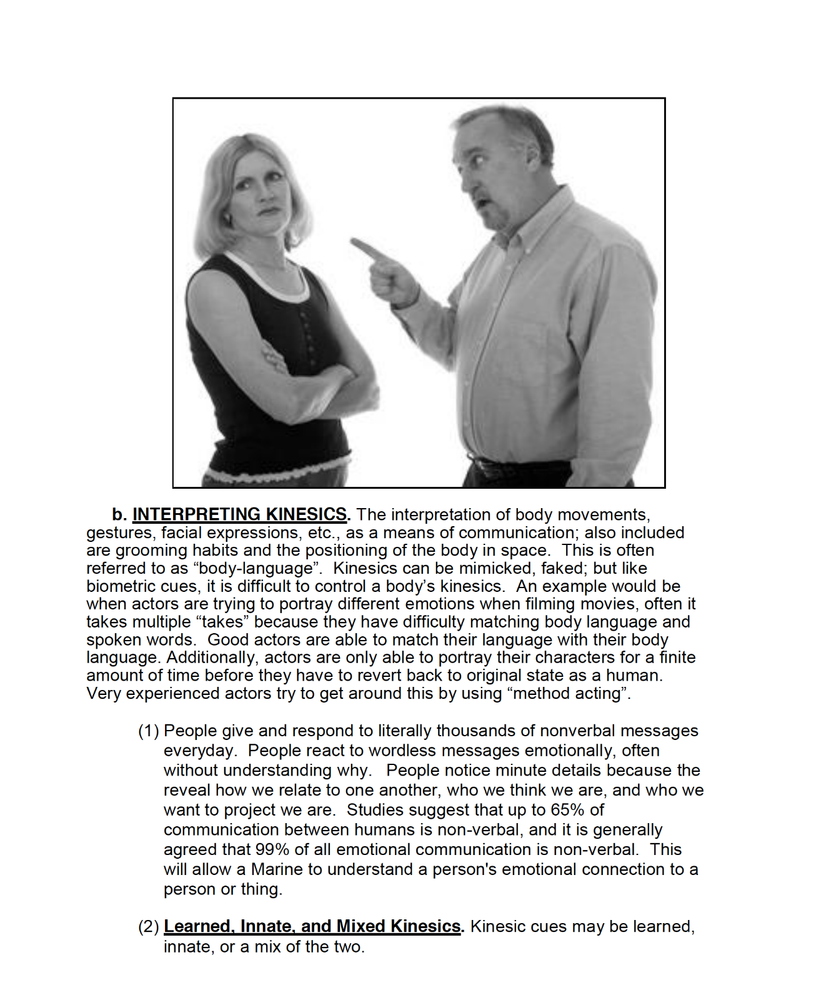
Check the listing for details. 849 page USMC Combat Hunter Training Introduction And Fundamentals on Data CD. Condition: New. Listed at 14.99 USD. DIRECT DOWNLOADS AVAILABLE FOR PUBLICATIONS ONLY Do you prefer a permanent digital download rather than a mailed physical CD/DVD? Request this by message to me with the CONTACT SELLER button and I will provide a permanent download link for all items and refund all shipping costs. COMBINING SHIPPING COSTS Are you purchasing multiple items? I will: a) combine all invoices before payment and charge shipping equivalent to one item, or b) refund all shipping costs in excess of one item after payment. APPROVED FOR PUBLIC RELEASE - DISTRIBUTION UNLIMITED. All derivative (i.e. change in media; by compilation) work from this underlying U.S. Government public domain/public release data is COPYRIGHT © GOVPUBS.COM $3.00 first class shipping in U.S.; save by combining auctions. Copy of Public domain (not copyrighted) U.S. Government manual; not copied from another CD-ROM product. 849 pages in PDF format copied on to CD Includes the Adobe Acrobat Reader for easy viewing and printing. The purpose of the Combat Hunter Trainer Course is to produce a Marine capable of training a more ethically minded, tactically cunning, and situational aware Marine capable of proactively identifying threats in any environment. In today’s dynamic tactical environment, the ability to see, observe, and interpret what is around us is a crucial skill to master in order to successfully operate on the battlefield. Awareness is having knowledge of your surroundings and is a state of consciousness. Situational Awareness refers to the degree of accuracy by which one's perception of their current environment mirrors reality. Being observant of your environment and being able to recall details of what you see are skills that will allow you to better interpret your area of operations in battle. You want always to be the hunter, and never the hunted. “Conflict may be viewed as time-competitive cycles of observation-orientation-decision-action (OODA).” “First, each party to a conflict enters the fray by observing himself, his surroundings, and his enemy. In tactics, this equates to adoption of a hunting instinct: searching; actively looking; hunting for the enemy; and seeing what he is doing or is about to do. It also includes anticipating the enemy’s next moves—getting inside his mind.” “Second, based upon those observations, the combatant orients to the situation, that is, produces a mental image of the situation and gains situational awareness. This awareness becomes the foundation on which to erect a plan. 1. INTRODUCTION TO COMBAT PROFILING. Combat Profiling is a method of proactively identifying enemy personnel or threats through human behavior pattern analysis and recognition. Combat profiling is a tool that Marines can use to improve their ability to move through the Decision Cycle. Combat Profiling influences actions at all levels of command; not only increasing individual survival on the battlefield, but assisting the commander in his Intelligence Preparation of the Battlefield. Combat Profiling equips Marines with a more thorough understanding of Human behavior and ability to read the Human Terrain. Whatever the threat; be it an IED, ambush, surveillance, or snipers, there are certain observable and measurable characteristics that the enemy must have to be successful. Combat Profiling works on people, places and events, vehicles, things, and in any culture or location. a. Combat Profiling is a combination of time-tested, current-trend profiling, and behavior-patterning analysis. This analysis can effectively be used to detect enemies hiding within a civilian population. Combat Profiling relies on identifying typical human behavior patterns, through the six profiling domains, to establish a baseline. Humans, by nature, tend to follow predictable patterns of behavior. b. Combat profiles are indicators based on the enemy's techniques, tactics, and procedures (TTPs); and their observable and measurable behavior patterns. When Marines identify the enemies’ TTPs and behavior patterns, they can assist you to identify the enemy among the civilians. Profiles are deviations (anomalies) from a normal or typical behavior (the baseline) which would lead you to believe that an observed situation (persons, events, vehicles and objects) may have the potential for harming you or other people. These deviations are anomalies that stand out from the surrounding area's baseline. BASELINE+ANOMALY=DECISION ...
You may also like