| All returns accepted | ReturnsNotAccepted |
|---|---|
| Brand | Digitech |
| Type | NA |
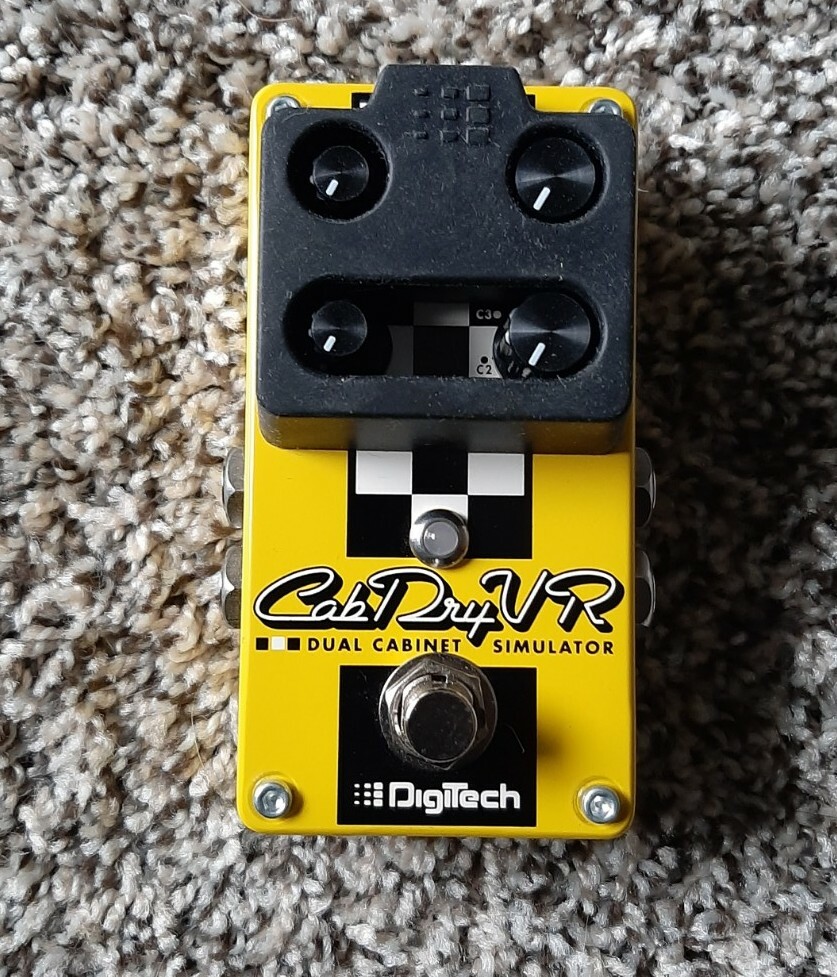
| Model | DoD Digitech Cabinet Simulator CabDryVR |
| MPN | CabDryVR-U |
Check the listing for details. DoD Digitech Cabinet Simulator CabDryVR Cab Driver. Condition: New. Listed at 134.00 USD. DigiTechs take on this is acompact stompbox-format dual-channel cabinet emulator. It allows full dual-mono operation, processing two inputs separately. Alternatively, asingle guitar amp can be processed using two different virtual speaker cabinets, or the pedal can process the guitar on one channel, while also outputting adry signal on the other. The CabDryVR input can only accept line/instrument signal levels, such as from your guitar, from your pedals, or from apreamp line output or effects send. It cant receive the output directly from apower amplifier, though youd need to route the power amp output to the CabDryVR via aDI box that can accept speaker-level signals. Its also worth noting that theres no dummy load built in for use with valve amplifiers, the speaker or aseparate dummy load needs to remain connected. The CabDryVR is built into asturdy cast case, with the dual inputs and outputs on metal jacks, and it comes with aStompLock rubber protector which slips over the controls to prevent them being knocked during aperformance. Power comes from a9V adaptor such as Digitechs own PS0913DC (125mA or more), though this is not provided and battery operation is not supported. If only input Ais used, the signal is sent to both channels. The pedal has atrue-bypass footswitch, with an LED to show whether the pedal is active (green for guitar, yellow for bass). This LED also flashes red if clipping is detected. The emulations are based on two sets of seven cabinets: one set for guitar and the other for bass. AGuitar/Bass switch flips between the bass and guitar cabs, and although you can run two separate cabs this is aglobal setting you cant set one channel for guitar and the other for bass. The cabinet type on channel Ais selected using aseven-position Cab Type rotary switch. Channel B has asimilar knob which serves up the same first six cabinet types, but its last position is the dry, unprocessed analogue out. This last position makes it possible, for example, to send an emulated DI from channel Ato the front-of-house mixer, and adry version to an on-stage amp. Each channel also has adual-concentric control to adjust the output level and to tune the cabinet size, presumably by changing the length of the IR. Note that, as IR processing inherently adds atiny delay, the emulated and dry outputs will not be exactly in-phase, so if using both at the same time some form of delay compensation may be needed to avoid tonal changes if the signals are combined. The emulations are of popular US and UK cabinets, and these include 2x12-, 4x12- and even 1x8-inch models for guitar (oddly, theres no 1x12) and aselection of 15-, 18-, 4x10- and 8x10-inch cabinets for bass. So the cabinets on offer cover alot of tonal ground, and while its impossible to confirm with certainty which amps/cabs were used (differences in mic choices and placement prevent that), Ican vouch for their musicality. The size control moves the resonances in the response and performs auseful role in helping tune the cabinet to the task in hand. For live use, where the amplifier being DId has anon-emulated line output, the CabDryVR has alot to offer, not least the ability to add interest in stereo by running two different emulations simultaneously.In the studio, on the other hand, the CabDryVR covers similar ground to so many IR-based software speaker-cabinet emulators. Yet, it does have its own unique voice, which sounds good it could be used to give the line output of your recording combo awhole new set of voices or, in place of EQ, to process the output from your pedals to produce aworkable sound when the amplifier is absent from the signal chain (since most guitar amps lean towards boosting the mids and highs rather than offering aflat response). Ultimately the CabDryVR does what it sets out to do and it does it well, and the two-channel format marks it out from the competition while Ifind that my BluGuitar BluBox, which can also accept speaker-level signals, sounds even better, the CabDryVR is around half the price and can serve up twice as many cabinets at atime.
You may also like