| All returns accepted | ReturnsNotAccepted |
|---|---|
| Modified Item | No |
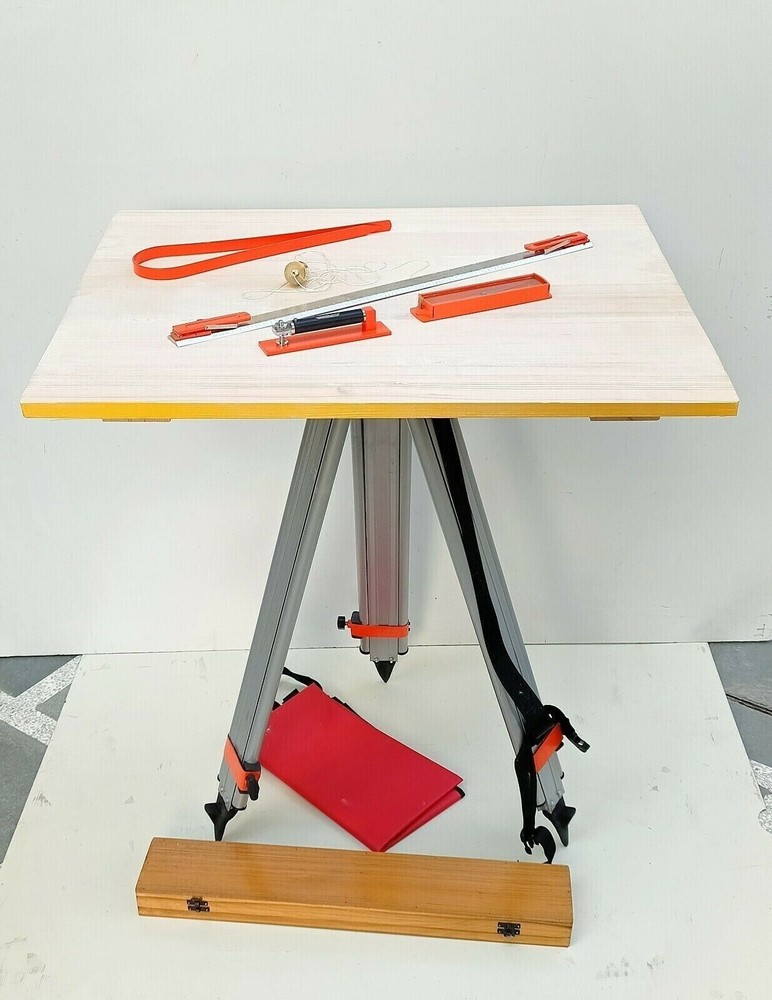
Check the listing for details. F.E. Brandis No. 1660 Transit/Wood Case 1890 - 1916. Listed at 1199.99 USD. This F.E. Brandis No. 1660 transit (F. E. Brandis, Sons & Co., manufactured instruments from 1890 through 1916)….this instrument appears identical to the example held by the Smithsonian National Museum of American History…..…I purchased this transit from a practicing Landscape Architect in Philadelphia, PA. He used it in his practice for decades. When he closed his practice, I purchased it from him in 1994 and used it in my practice for several years. It is now time for a new steward….Scope 10”….dial 5” inside rim to inside rim….round brass base plate holding the dial i9-/14 diam..hanging level is 5-7/8 long….approx 14-1/2 inches tall….includes the original hardwood case, with the original paper label(see photo) and brass plumb bobF.E. Brandis 1845-1916Frederick Ernest Brandis was born in Hildesheim, Germany in1845. He came to the United States in 1858 where he worked for Stackpole & Brother, maker of surveying and nautical instruments for a few years.He opened his own instrument shop and is first listed in the New York City directory on May 1, 1872; the firm name was listed as Brandis, F. & Co. math. insts. He advertised as a maker of mathematical instruments, his advertisement of that date states “formerly with Stackpole & Brother”. By 1878 he had become a partner with Richard Teckritz, when the firm name was listed in the New York city directories in 1878 and 1879 as Brandis & Teckritz, math. insts. After several years Frederick was again in business by himself. In the 1882 directory his is listed: Brandis, Frederick E. math. insts. He apparently made 3 circular dividing engines because in Catalog 17, issued in 1902, he states on page 30: “Description of our new graduating engine – when in 1884, we completed our second circular graduating machine with very gratifying results, we immediately undertook the construction of a third one, which is automatic in all its movements. We are proud to say that the results obtained have surpassed our most sanguine expectations, and we can now justly claim for our graduating engine superiority over those of most European competitors.” An article in 1887 Annual Report of the Commissioners of the State Survey for New York reads as follows: “In the winter of 1882 a very satisfactory telescope was constructed by Brandis, of New York, for the No. 2 theodolite. This telescope has a clear aperture of 2 ½ inches and a focal length of 2 feet. It was used with an eyepiece of 40 diameters in 1883, and the results obtained, which will be referred to hereafter, indicate that the instrument is now capable of being employed upon triangulation of any magnitude and of the highest order of precision. This telescope must be lifted from the supports to reverse it, and its use is confined to the measurement of horizontal angles. The sunshade is made of hard rubber and weighs less than 3 ounces. A small blackened disc of wood is attached to the eyepiece end of the telescope in such a manner as to come opposite to the eye that is not in use. This has been found a means of considerable relief in prolonged observing.” In 1890 he took his 2 sons as partners, moving their office and factory from 54 Fulton Street, NY to 754 Lexington Ave. in Brooklyn. Henry, who was then 24, and William aged 22; the new arrangement being reflected in the change of the firm name to F. E. Brandis, Sons & Co. Henry Brandis was born in New York City on February 25, 1866, he died in Brooklyn on December 1, 1959. William Brandis was born in Brooklyn on February 3, 1868 and died in a Long Island Hospital on November 26, 1936. Frederick E. Brandis died in Brooklyn in 1916, the firm name changed again to Brandis & Sons, Inc.
You may also like