| Restocking Fee | No |
|---|---|
| Return shipping will be paid by | Buyer |
| All returns accepted | Returns Accepted |
| Item must be returned within | 14 Days |
| Refund will be given as | Money Back |
| Country/Region of Manufacture | United States |
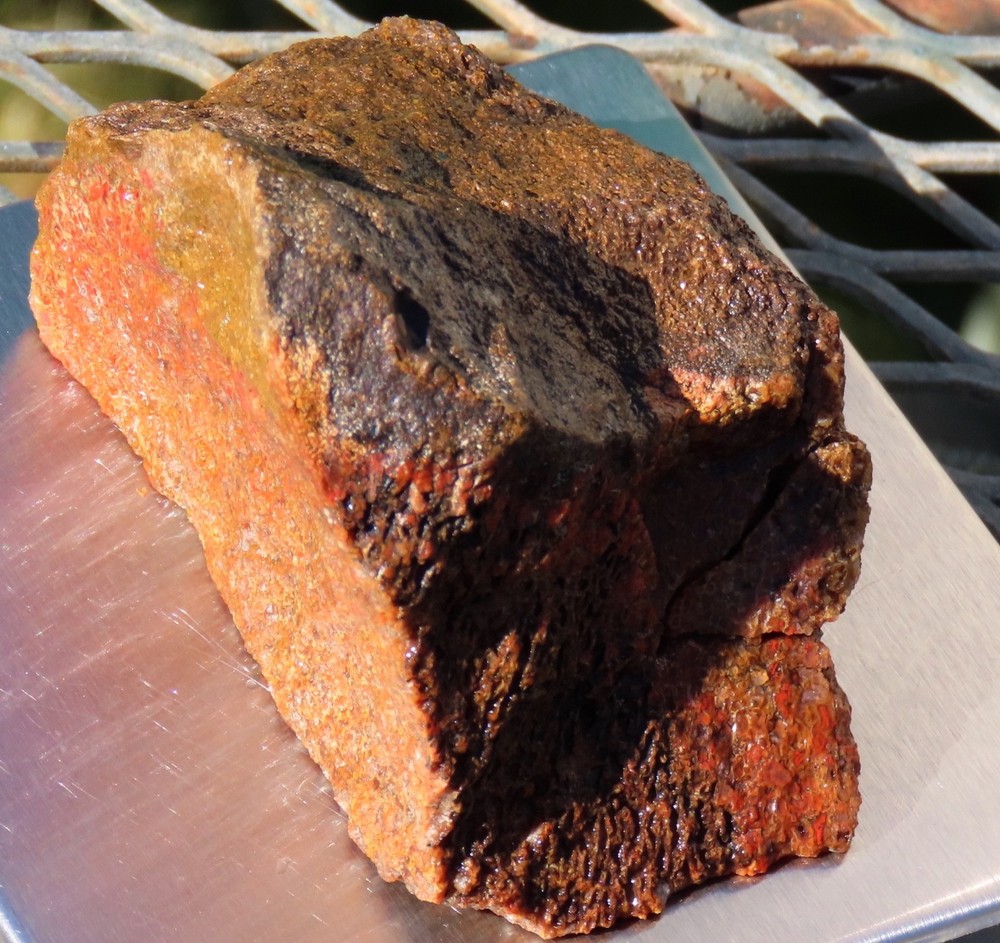
Check the listing for details. Iguanodon Dinosaur Thumb Spike, 5 inches #109. Condition: New. Listed at 25.00 USD. 5 Inch Iguanodon Dinosaur Thumb Spike (Replica #109) cast in solid resin Specs: Iguanodon.Early to Middle Cretaceous (140-110 m.y.a.). Thumbs up! This unique thumb spike belongs to Iguanodon, a plant-eating dinosaur. Iguanodon's hand worked backwards: the thumb couldn't move (but worked well as a weapon) and the "pinky" finger wrapped around to grasp. The most famous feature of Iguanodon is the large thumb spike that was probably used for defense against predators. Iguanodon was named in 1825 by English geologist Gideon Mantell. Iguanodon was the second type of dinosaur formally named based on fossil specimens, after Megalosaurus. Together with Megalosaurus and Hylaeosaurus, it was one of the three genera originally used to define Dinosauria. Iguanodon were bulky herbivores that could shift from bipedalism to quadrupedal. The only well-supported species, Iguanodon. bernissartensis, is estimated to have weighed about 3.4 tons on average and measured about 10 meters (33 feet) long as an adult, with some specimens possibly as long as 13 meters (43 feet). These animals had large, tall but narrow skulls, with toothless beaks probably covered with keratin, and teeth like those of iguanas, but much larger and more closely packed. Iguanodon teeth are, as the name suggests, like those of an iguana, but larger. Unlike hadrosaurids, which had columns of replacement teeth, Iguanodon only had one replacement tooth at a time for each position. The upper jaw held up to 29 teeth per side, with none at the front of the jaw, and the lower jaw 25; the numbers differ because teeth in the lower jaw are broader than those in the upper. Because the tooth rows are deeply inset from the outside of the jaws, and because of other anatomical details, it is believed that, as with most other ornithischians, Iguanodon had some sort of cheek-like structure, muscular or non-muscular, to retain food in the mouth. THE IMPORTANCE OF FOSSIL REPLICAS By definition authentic fossils are unique one-of-a-kind occurrences. No two fossils are identical. In fact, many fossils are the one and only known specimen of a particular genus or species. With only one specimen available for study how do paleontologist around the world study such rare and often very fragile specimens? One answer to that question is through replicas cast directly from the original fossil. This way many exact copies can be made and distributed for research and museum display all over the world. Thus, fossils replicas are an important scientific tool. In some cases, a replica of a fossil lost or destroyed may be the only remaining evidence of the original fossil. Replicas allow direct study of otherwise unattainable specimens. Replicas allow the public to see, enjoy and learn about specimens that otherwise might be locked away in some storage cabinet or vault. For example, there is only one original Archaeopteryx specimen known as the Berlin specimen and that original is kept in a vault in Germany. However, nearly every museum in the world displays a replica of this important fossil. Another example is the Tyrannosaurus rex known as Sue? the most complete specimen ever found. There is only one original, but replicas are in museums all over the world. The importance of replicas in paleontology and education cannot be overstated.
You may also like