| All returns accepted | ReturnsNotAccepted |
|---|---|
| Brand | Springplant |
| Season of Interest | Fall |
| Type | Vegetables |
| Growth Stage | Vegetative |
| Climate | Continental |
| Color | Green |
| Indoor/Outdoor | Outdoor |
| Number in Pack | 1 |
| Features | Edible |
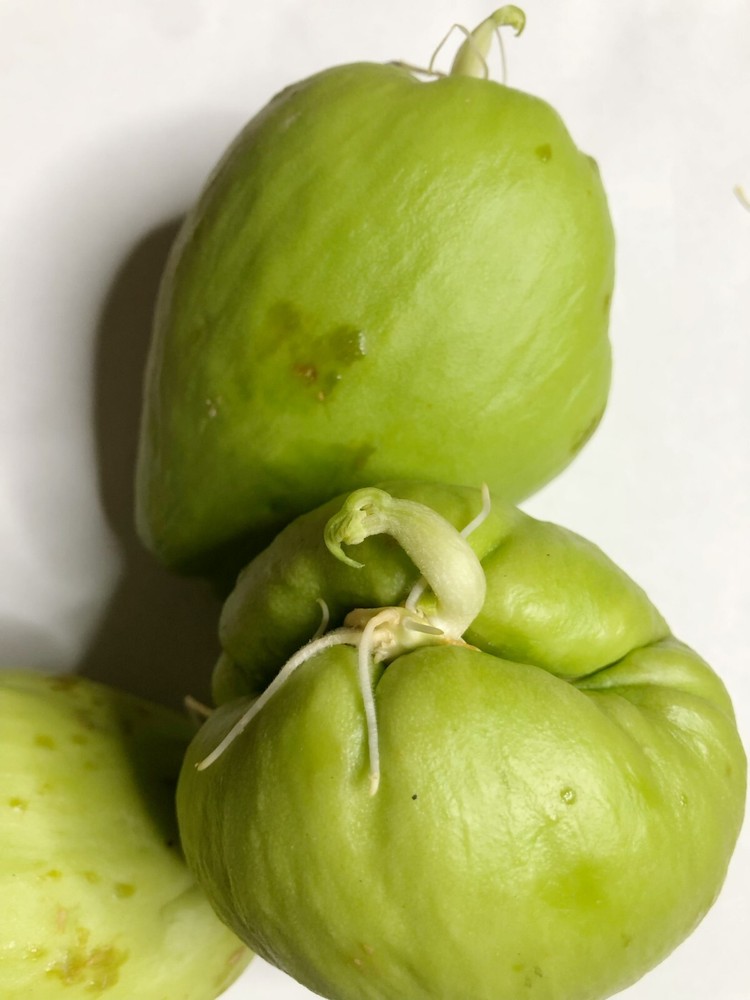
Check the listing for details. Sprouting Chayote, Choko, Chocho, Vegetable Pear, Mirliton. Color: Green. Listed at 15.99 USD. Chayote is a type of vegetable that belongs to the squash family and has a wide range of uses. Not only can the fruit be eaten, but the stems, young leaves, and tubers are also edible. It can be prepared in many different ways, including boiling, steaming, or adding it to various dishes like stews, pasta, and sauces. Growing chayote is relatively simple, and it produces a plentiful crop of nutritious and flavorful fruit. However, the plant is sensitive to cold weather, so it is recommended to grow it in zones 7 and higher. In areas with colder climates, heavy mulching and cutting the vines back to ground level can help protect the plant from frost. The chayote plant requires a 30-day period of frost-free weather to produce fruit, and it may not flower until September. To grow chayote, it is recommended to leave the fruit at room temperature until a sprout emerges. Once the sprout is about six inches long, plant the fruit in well-drained, sandy soil at a 45-degree angle with the fat end down, making sure to leave the sprout exposed. The chayote plant has shallow roots and does best in a half-shade area that is slightly elevated on a mound to avoid root rot. It is also recommended to provide support for the vines to climb, such as a fence. Overall, growing chayote is a straightforward process that can yield a bountiful and delicious harvest.
You may also like